Okonomiyaki Hana is a restaurant born from memory and stubbornness. Owner-Chef Koichi Sumitani spent years building a successful career in real estate, led large-scale residential projects, designing floor plans himself, before a single memory refused to leave him alone. It was a small okonomiyaki (a savory Japanese pancake made with batter, cabbage, and various fillings, grilled on an iron griddle) shop by the sea in his youth. Nothing famous. Just deeply, impossibly addictive.
At the age of fifty, Sumitani made a bold decision that many advised against. He left behind a successful corporate career, entered the restaurant industry with no professional culinary training, and spent years perfecting his batter recipe and cooking techniques at home. In December 2008, he opened Okonomiyaki Hana near Osaka Business Park.
Rather than relying on advertising, Sumitani trusted the quality of his food to speak for itself. That faith was rewarded when Hana was recognized by the Michelin Guide in 2016. Word quickly spread, and today the restaurant welcomes diners from more than 27 countries around the world.
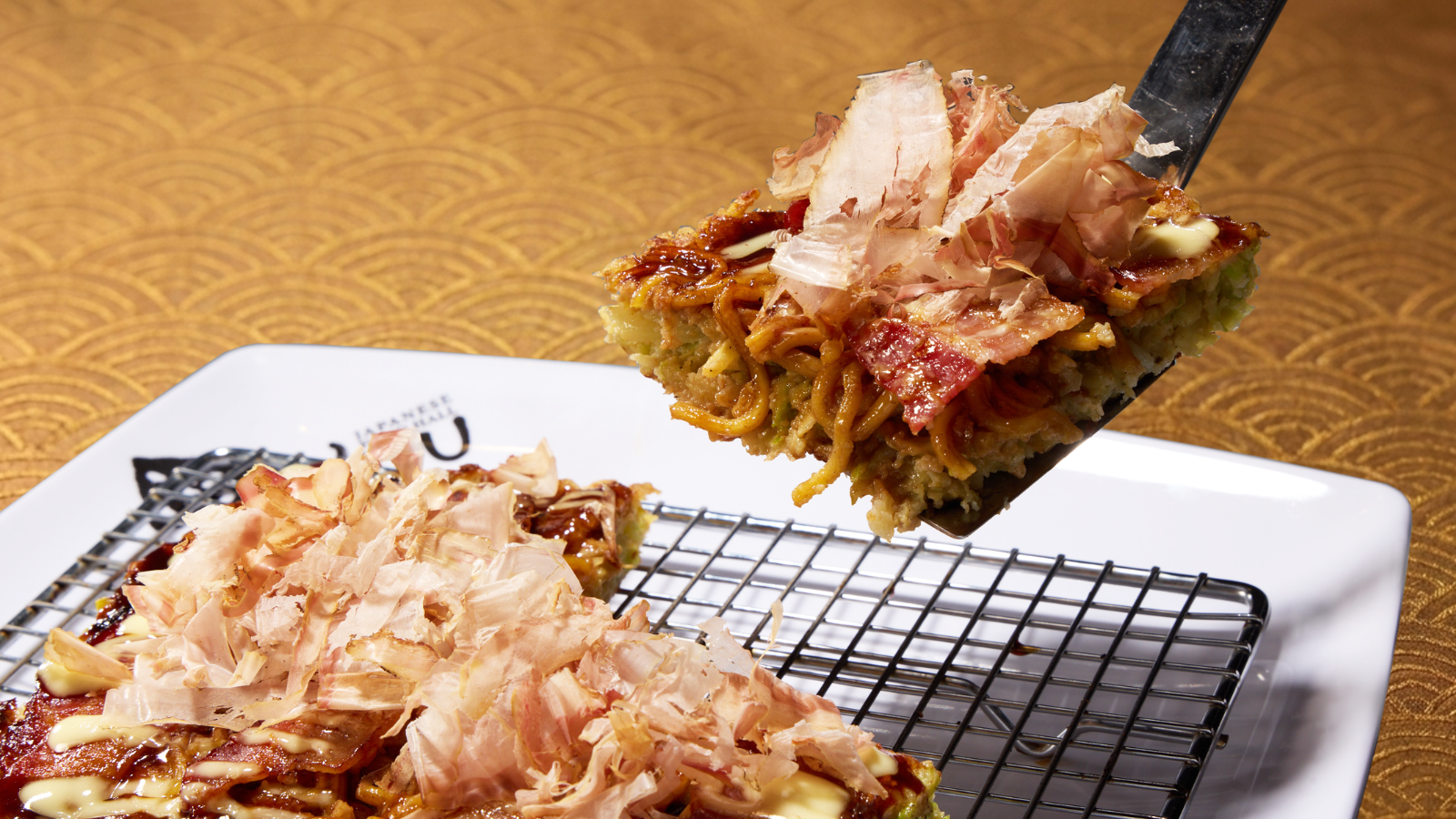
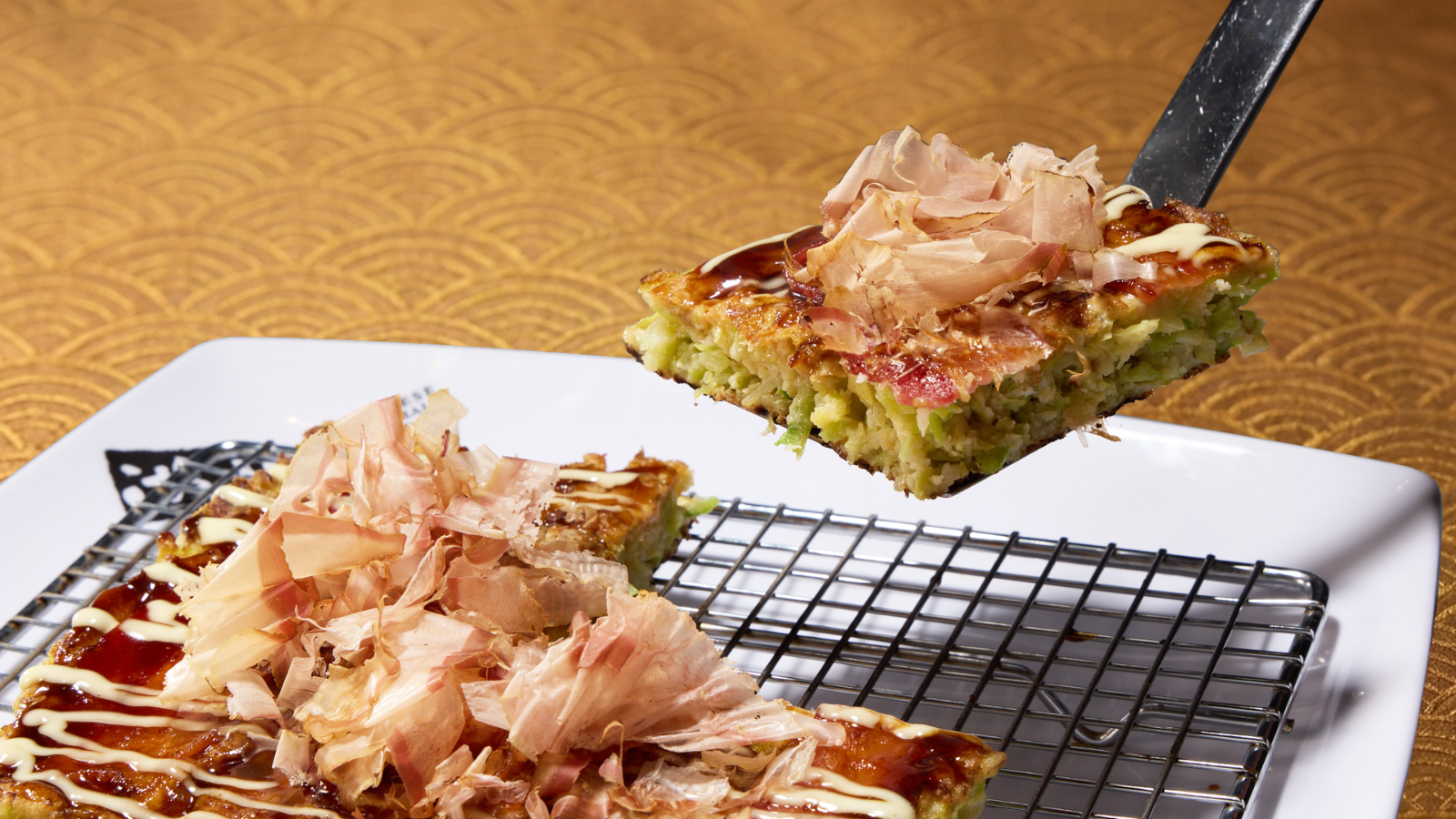
What makes Hana's okonomiyaki distinct is its departure from the conventional Osaka style. Rather than mixing all ingredients into a thick, heavy batter, Sumitani uses a high ratio of cabbage and eggs to create an airy, light batter that is cooked in a tempura-like method with generous lard on the griddle. The signature square shape allows the pork to be cut neatly across the grain, preserving texture. The exterior is crisp; the interior is fluffy.
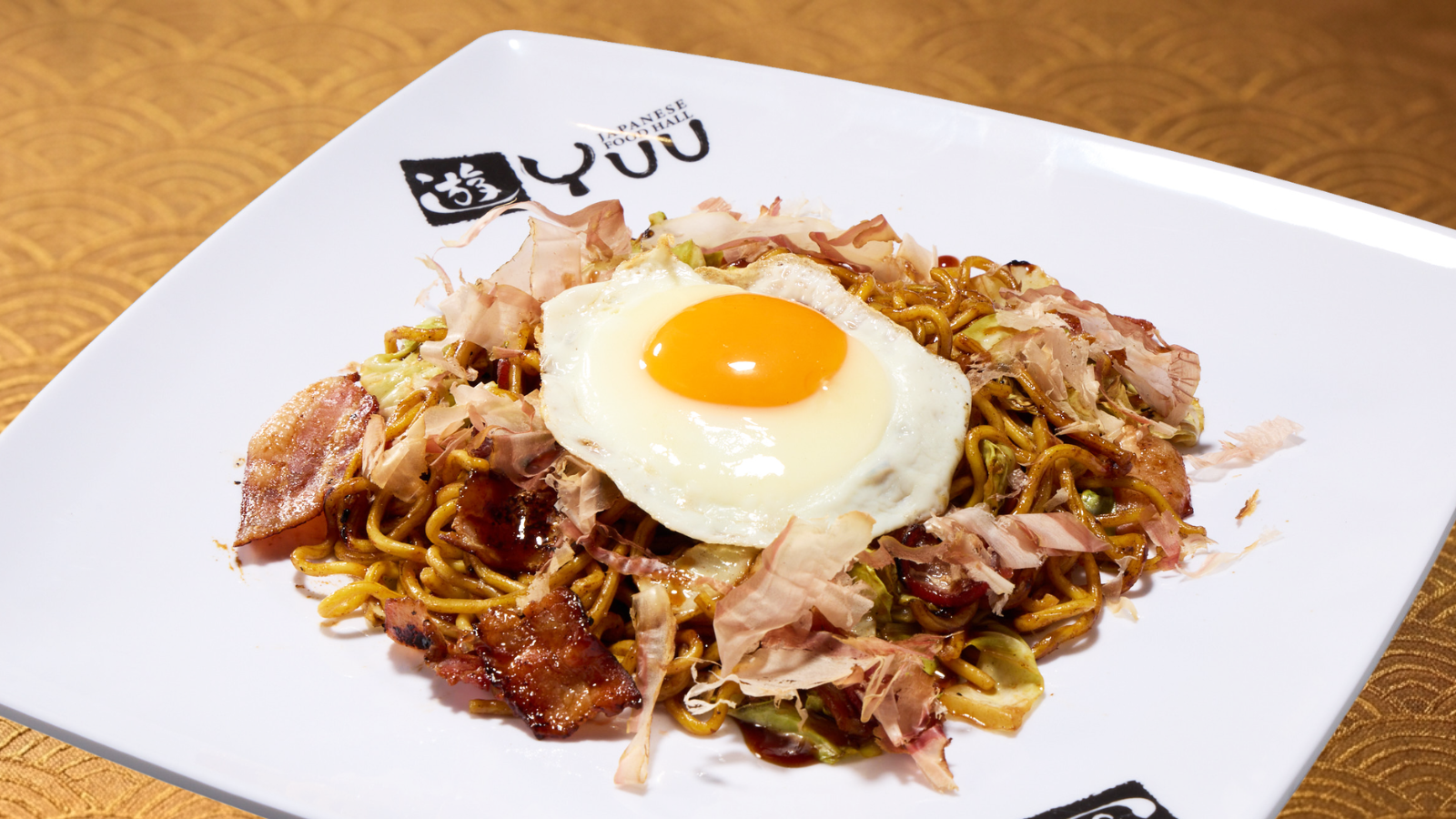
Signature dishes include the Butatama, which lets the batter's flavor carry the dish; the Buta Modan, Osaka-style okonomiyaki with noodles folded inside; and Yakisoba topped with sunny-side-up egg.
Okonomiyaki Hana joins YUU Japanese Food Hall, bringing its Michelin-recognized Osaka okonomiyaki to the U.S. For many Americans, the first bite may bring a simple realization: "I did not know food like this existed."